Buying a new home is never an easy decision in anyone’s life. It’s a dream come true, but it requires smart financial planning and careful decision-making. Whether you are a first-time homebuyer or planning to invest in a second property, having a well-planned budget will help you make the right choices without straining your finances.
In this detailed guide, we’ll take you through every step — from understanding your finances and home loans to identifying hidden costs, checking documents, and choosing the right property type for your family.
The first and most important step before you start your property search is to define your purpose for buying a home. Are you buying it for your own use, as a long-term investment, or to earn rental income?
If you’re buying it for personal living, you’ll want to focus on comfort, location, and lifestyle facilities – like proximity to your workplace, school, markets, and hospitals. On the other hand, if your goal is investment, look for areas that are developing fast, have upcoming infrastructure, and show potential for future price appreciation.
Having clarity on your goal helps you avoid emotional decisions and narrow your search to homes that fit your real needs and financial plan.
Before you start exploring projects, take an honest look at your financial situation. This includes your monthly income, ongoing debts (like car loans or credit card bills), and existing savings.
Experts recommend the 28/36 rule — your monthly home loan EMI should not exceed 28% of your monthly income, and your total debt (including other loans) should be under 36%.
You should also set aside an emergency fund that covers at least six months of expenses. This ensures that you can handle financial surprises like medical emergencies or job changes without missing EMI payments.
Being clear about your affordability helps you shortlist properties that are realistic and within reach — preventing unnecessary stress later.

For most buyers, a home loan is what makes buying a property possible. But before you apply, it’s important to understand how eligibility works. Banks and lenders check your income, credit score, age, employment type, and repayment capacity.
A CIBIL score above 750 generally improves your chances of getting a home loan at a lower interest rate. You should also compare loan offers from different banks — check interest rates (fixed vs. floating), processing fees, prepayment charges, and total tenure.
Tip: Use a home loan EMI calculator to see how much you’ll pay monthly and what total interest you’ll owe. It’s better to choose an EMI that fits comfortably into your budget rather than stretching your finances too thin.
A fixed interest rate means that the interest rate on your home loan remains the same throughout the loan period — regardless of changes in the market or RBI policy.
For example, if your bank offers you a fixed rate of 8.5%, you’ll continue to pay EMIs calculated at 8.5% for the entire loan tenure (say 15 or 20 years).
Best for: Buyers who value predictability, have a steady income, and plan long-term ownership.
A floating interest rate (also called a variable rate) means that your interest rate changes over time depending on market conditions and the Reserve Bank of India’s (RBI) policies.
For example, if your bank offers you a floating rate of 8.5% linked to an external benchmark (like the repo rate), your rate may increase or decrease whenever the RBI changes its repo rate.
Best for: Buyers who can handle short-term EMI changes and want to save money if rates fall.
In short:
A down payment is the amount you pay upfront when buying a property, while the rest is financed by your bank. Usually, you need to contribute 10%–20% of the property’s cost as a down payment.
For example, if your home costs ₹60 lakh, your down payment could range between ₹6 and ₹12 lakh. Planning early is key here — start saving in advance through SIPs or recurring deposits.
If you’re a first-time buyer, you can also explore government housing schemes like PMAY (Pradhan Mantri Awas Yojana), which offer interest subsidies on home loans. A bigger down payment means lower EMIs, better loan terms, and less overall interest burden.
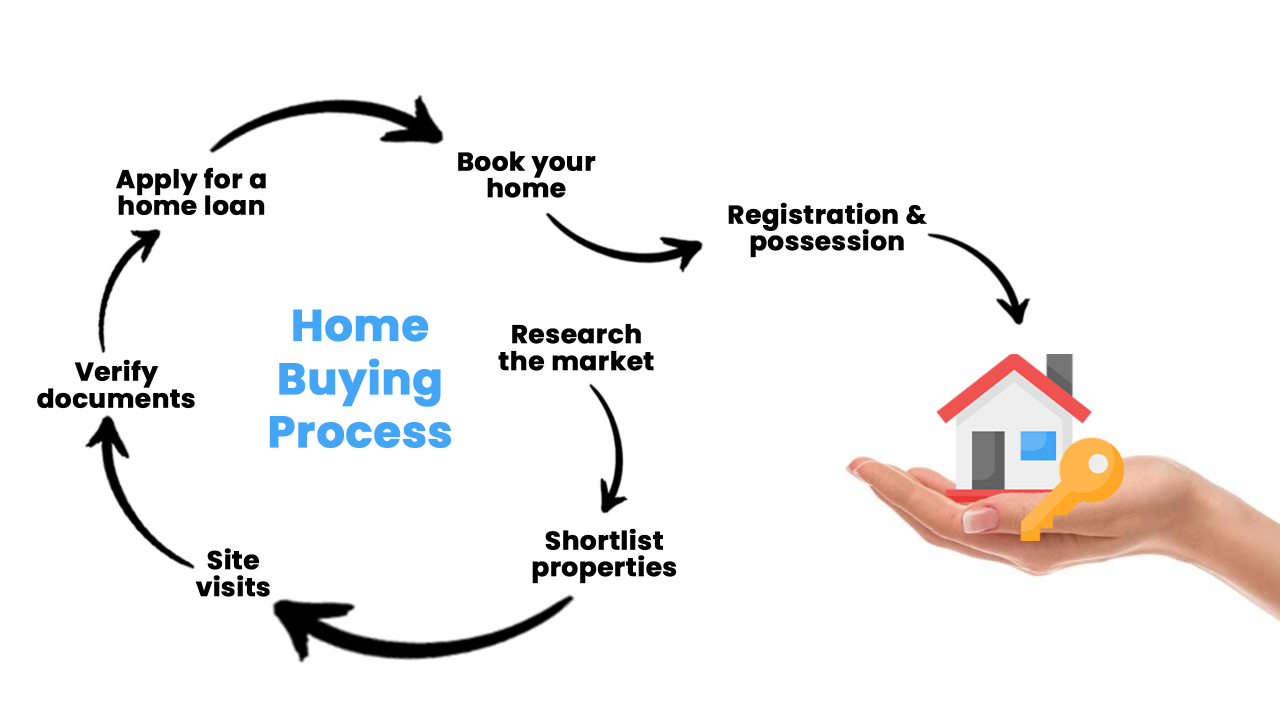
The home-buying journey involves several steps, and knowing them helps you plan both your time and money efficiently.
Explore areas that fit your lifestyle and budget.
Compare options based on amenities, connectivity, and price.
Visit projects personally to see construction quality and surroundings.
Ensure the property has RERA registration, clear titles, and approvals.
Get pre-approval if possible to know your loan limit.
Pay the booking amount and sign the sale agreement.
Pay stamp duty and registration fees, and take possession.
Each of these stages involves specific costs, so having a clear financial plan prevents last-minute stress.

A little patience and research can save you lakhs in the long run.
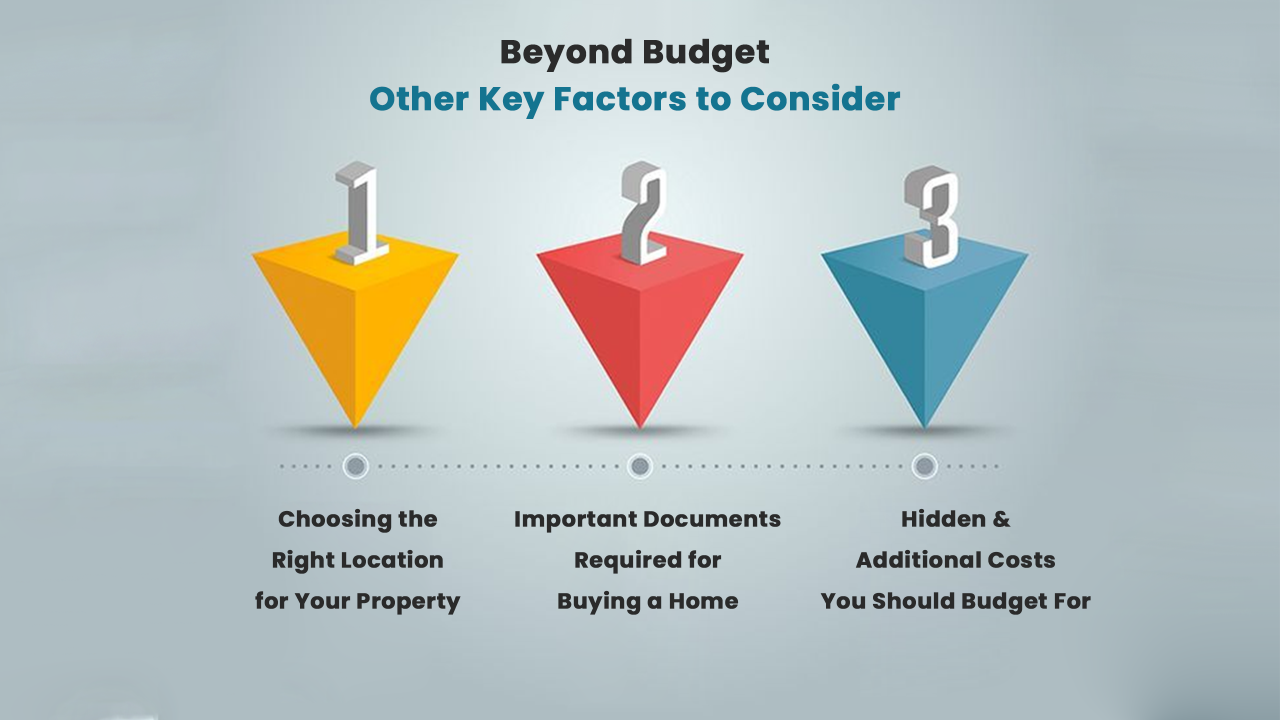
While budgeting is the first step toward buying a new home in Ahmedabad, it’s not the only one. You should also consider factors like choosing the right location, verifying all important documents, and accounting for hidden or additional costs.
Decide whether to invest in a ready-to-move, under-construction, or pre-launch project, and choose between a flat or an independent house based on your lifestyle. Picking the right BHK size, understanding the cost of living, and taking expert guidance before finalizing your purchase will help you make a well-balanced and secure investment.
Location determines not only your convenience but also your property’s appreciation rate.
A great location today ensures higher resale value tomorrow.
Buying property is not just about money — it’s also about legal security. Checking the right documents ensures you’re buying a property that’s legitimate and dispute-free.
Here’s a list of documents you must verify:
Always hire a property lawyer to check these documents before paying any amount.
One of the biggest mistakes buyers make is ignoring the hidden costs beyond the base property price. These can increase your overall spending by 5–10%.
Common additional expenses include:
Plan these in advance so you’re not caught off guard later.

Before buying a home, there is a big question: which one to buy? Ready to move or under construction, or pre-launch. Each property type comes with its advantages and trade-offs. But which is the best with your planning of buying a home?
Choose based on your timeline: if you need immediate housing, go ready-to-move; if investing, go under construction. But still there is another big question: what to buy, an individual house or a flat? Let’s break it down in the next topic.

Choosing between a flat and an independent house depends on your lifestyle.
If you prefer convenience, community, and modern living — choose a flat in a gated society. If space and independence matter more, go for a house. Still, there is one more decision pending about BHK. Which BHK is good for your family, 1 BHK, 2 BHK, or 3 BHK?
Your choice of BHK defines not just your comfort but also your long-term financial planning.
Perfect for bachelors or newly married couples. Low maintenance and affordable EMIs make it ideal for first-time buyers.
The most popular choice among small families. It offers a balance between affordability and space — especially in areas like South Bopal or Gota.
Spacious and perfect for growing families or professionals needing a home office. The resale value of 3BHK flats in premium areas like Thaltej or Shilaj is high.
Think of your 5-year lifestyle plan — not just your current need — before deciding.
Ahmedabad is among India’s most livable cities — but the cost of living varies significantly by area.
Satellite, Prahladnagar, and Vastrapur have excellent connectivity and infrastructure but come with higher maintenance and daily costs.
Shela, South Bopal, Gota, and Science City offer affordable prices, new amenities, and good future appreciation.
What to Include in Cost of Living:
A flat with lower EMI but high maintenance costs might still strain your budget more than you expect.

Real estate is a long-term commitment — so expert guidance is important.
Consult real estate advisors, legal experts, and financial planners before making your final payment.
They can help you:
A well-informed decision today ensures peace of mind for years.
Buying a property in Ahmedabad starts with the shortlisting of your preferred locations and projects, verifying the RERA registration, checking all the property documents, finalizing a home loan if required, and signing the Sale Agreement. The final step includes property registration and paying the stamp duty and registration charges.
Top localities include Thaltej, South Bopal, Shela, Gota, Science City, Shilaj, and Satellite. These areas boast sound connectivity, good schools, hospitals, and affordable and premium residential projects that can serve the purpose of both living and investment.
Most banks require a down payment of 10% to 20% of the property’s total cost. So, with a flat costing ₹60 lakhs, one must budget ₹6–12 lakhs as a down payment, while the remaining portion may be financed by availing of a home loan.
You will need key legal documents such as:
Buyers often tend to overlook charges such as stamp duty, registration fees, parking costs, GST for under-construction projects, maintenance deposits, and society membership fees. Always add an additional 8-12% on top of the price to your budget for these costs.
Places like Thaltej, South Bopal, Science City, and SG Highway have excellent connectivity to schools, business hubs, and entertainment zones. The upcoming metro routes and expansion of highways are also boosting property value in these areas.
Visit the official website of Gujarat RERA- https://gujrera.gujarat.gov.in and search by project name or builder. You can check all the approvals, completion status, and legal details of the projects before investing in them.
Cost of living will be different. In places like Satellite or Vastrapur, the monthly maintenance and utilities are on the higher side, while in Shela or Gota, living expenses come out to be relatively affordable. Add items such as grocery, maintenance, loan EMI, etc., to the monthly budget.
Use a home loan EMI calculator available on most bank websites. As a rule of thumb, keep your EMI below 40% of your monthly income to maintain a balanced financial lifestyle. Compare loan offers from different banks before finalizing.
New projects such as the expansion of Ahmedabad Metro, growth of GIFT City, and new flyovers are triggering demand for real estate. Properties near these projects promise faster appreciation and hence are a good investment for buyers.
Ensure the project offers all major amenities like 24*7 security, parking, power backup, lifts, clean water supply, and fire safety. In premium societies, look out for add-ons like a gym, clubhouse, garden, and children’s play area.
Never skip legal checks, overlook hidden costs, or invest without verification from RERA. Never overstretch your budget or finalize any property without a personal site visit.
The resale value of flats in areas like Thaltej, South Bopal, and Shilaj will always remain high with good rental demand due to corporate offices, universities, and infrastructure growth. The average rental yield ranges from 3% to 5% per annum.
The current stamp duty is 4.9% of the market value of a property, and the registration fees are 1%. These rates may vary slightly based on property type and gender-based government concessions.
Home | Our Projects | Completed projects | EMI Calculator | Investor | Joint Development | Channel Partner | Vendor | Career | Articles | About Us | Privacy Policy | Contact Us
© Laxmi Goldorna House Limited 2025 – All Rights Reserved. | Powered by : Zero Dimensions