
Choosing between commercial property vs. residential property is one of the most common dilemmas for real estate buyers and investors. With rising property prices, changing work patterns, and evolving rental demand, the debate around commercial vs. residential real estate has become more relevant than ever.
Some investors prefer the safety and emotional value of homes, while others are attracted to the higher rental returns of offices and shops. But which option truly makes more sense in today’s market?
In this detailed guide, we will compare commercial property or residential property across returns, risk, demand, financing, and long-term growth—helping you make an informed decision.
Residential property includes homes meant for living purposes, such as:
When comparing residential real estate vs. commercial real estate, residential properties are generally seen as safer and more stable, especially in growing cities.
Commercial property is used for business or income-generating purposes, such as:
In the debate of commercial real estate vs. residential real estate, commercial assets are often preferred by experienced investors looking for higher income.
| Factor | Residential Property | Commercial Property |
|---|---|---|
| Primary Use | Living / Renting | Business / Income |
| Entry Cost | Lower | Higher |
| Rental Yield | 2–4% annually | 6–10% annually |
| Risk Level | Low to Moderate | Moderate to High |
| Tenant Lease | Short-term (11 months) | Long-term (3–9 years) |
| Vacancy Risk | Moderate | Location-dependent |
| Maintenance Cost | Lower | Higher |
| Financing | Easily available | Comparatively limited |
| Liquidity | High | Medium |
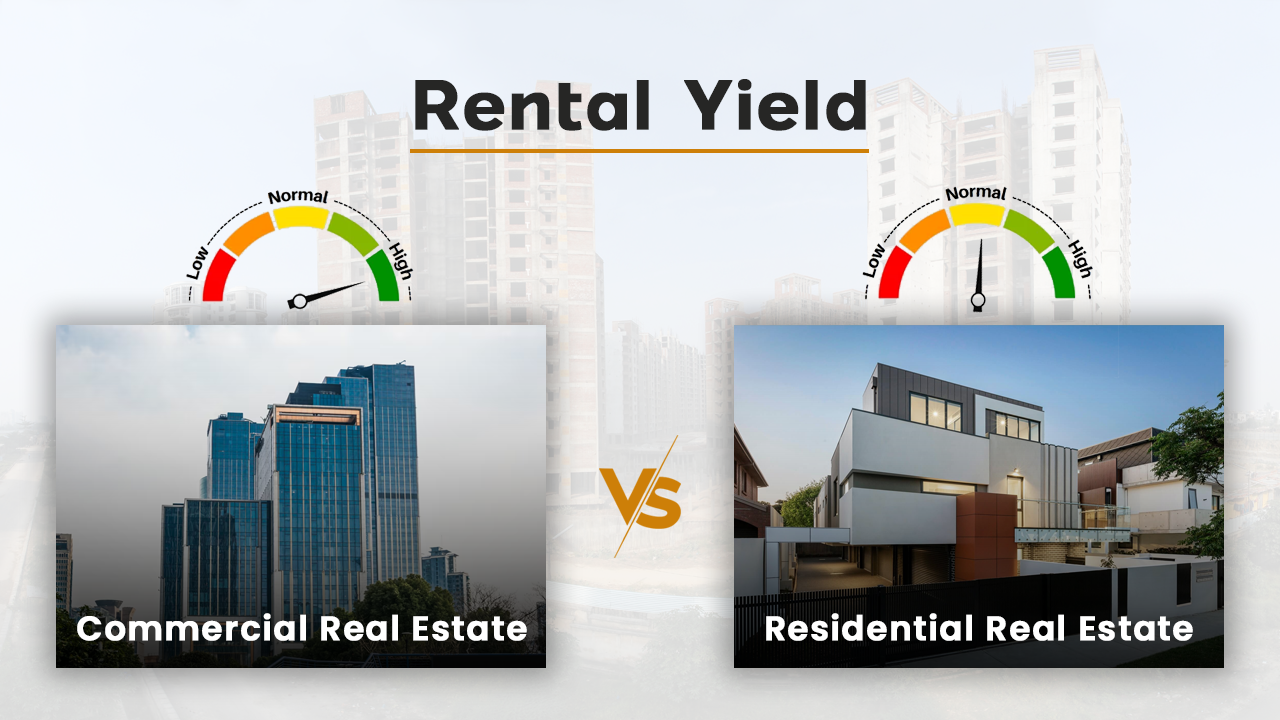
One of the biggest reasons investors lean toward commercial property is higher rental yield.
This is why discussions around commercial real estate vs. residential real estate investing often favour commercial assets for passive income seekers.
However, higher returns also come with
When comparing residential real estate vs. commercial, residential properties usually offer steadier appreciation, while commercial properties offer better income but uneven growth.
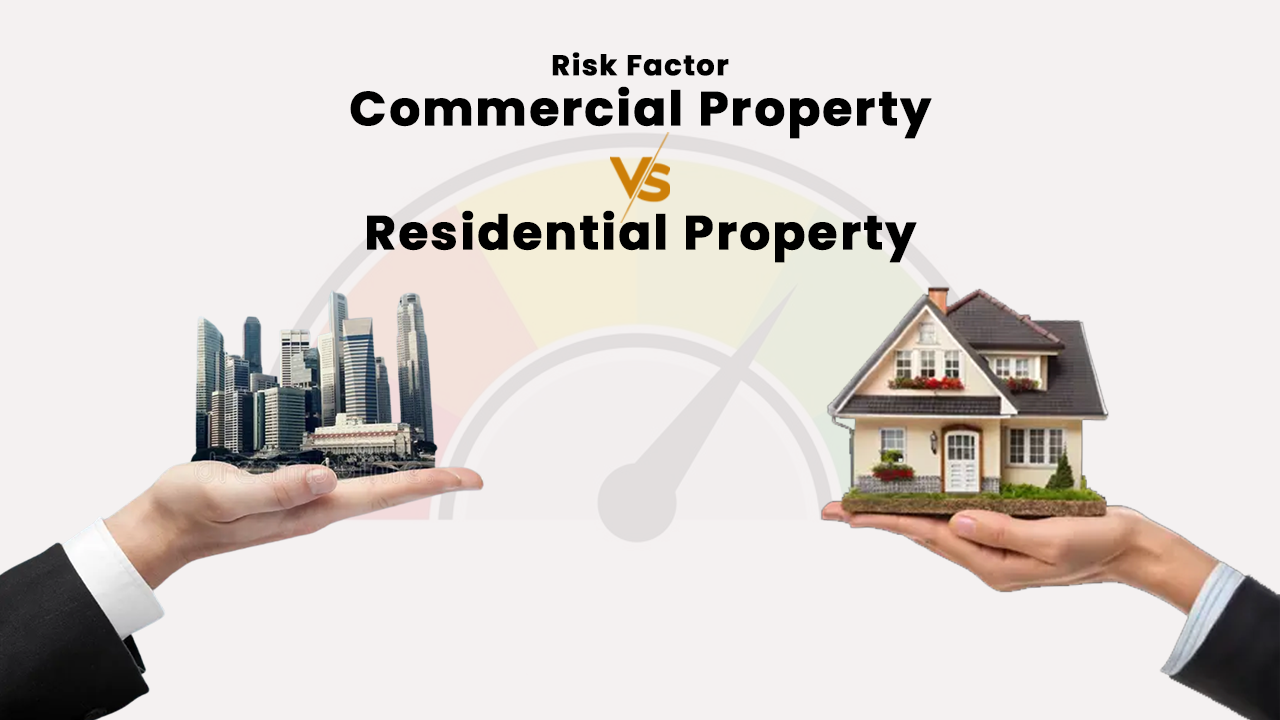
For conservative investors, residential real estate vs. commercial often tilts toward residential due to lower risk exposure.
This makes residential property more accessible, especially for first-time buyers deciding between commercial property or residential property.
From a liquidity standpoint, commercial vs. residential clearly favours residential assets.
Choose residential property if you:
Residential assets are ideal for buyers comparing commercial property vs. residential property for long-term safety.
Choose commercial property if you:
For seasoned investors, commercial real estate vs. residential real estate investing often becomes a diversification strategy.

In cities like Ahmedabad, Pune, or Bengaluru:
This city-specific factor plays a key role when choosing between commercial vs. residential real estate.
Taxation often makes residential property more attractive for individual buyers compared to commercial property or residential property.
A smart real estate strategy doesn’t force a choice—it balances both.
This balanced approach reduces risk and improves overall returns in commercial real estate vs. residential real estate investing.
One of the most overlooked aspects when comparing commercial property vs. residential property is the difference in legal requirements and documentation.
Residential properties generally involve simpler legal processes, including:
Residential properties are often governed by consumer-friendly laws, making them easier for first-time buyers to understand and manage.
Commercial real estate requires more detailed legal compliance, such as:
Because commercial property is used for business purposes, legal due diligence is more complex. This is an important factor when deciding between commercial property or residential property.

There are many misconceptions surrounding commercial vs. residential real estate, which can lead to poor investment decisions.
Reality: Rental income depends on tenant quality, business performance, and location. Vacancy risk exists in commercial real estate.
Reality: Residential properties also face risks such as tenant turnover, delayed appreciation, and maintenance costs.
Reality: While entry cost is higher, small commercial units like retail shops are accessible to individual investors.
Understanding these myths and facts helps you make informed decisions in commercial real estate vs. residential real estate investing.
Maintenance costs significantly impact long-term returns in both asset types.
From an ownership perspective, residential properties are easier and cheaper to maintain, which is why many investors prefer residential real estate vs. commercial for stability.
Vacancy risk plays a major role in cash flow planning.
This contrast is a key consideration when evaluating commercial vs. residential investment options.
Economic conditions influence commercial and residential real estate differently.
This is why conservative investors often lean toward residential when comparing commercial property vs. residential property during uncertain economic phases.
Exit planning is crucial in real estate investing.
From a liquidity standpoint, commercial vs. residential real estate clearly favours residential property.

Understanding future trends helps investors stay ahead.
These trends are shaping the future of commercial real estate vs. residential real estate investing and influencing long-term demand patterns.

When evaluating residential vs commercial property, Ahmedabad offers a balanced environment for both asset types. The choice depends largely on investment purpose rather than location. Let’s understand why property investment in Ahmedabad is a smarter choice.
Residential property in Ahmedabad benefits from consistent housing demand, easier financing, and higher liquidity. It is well-suited for first-time buyers and long-term investors seeking stability and predictable returns.
Commercial property, on the other hand, attracts investors focused on higher rental income. Long-term leases and professional tenants can generate better cash flow, but returns are more sensitive to business cycles and vacancy risks.
For most investors, residential property works best as a foundation, while commercial assets are ideal for diversification once capital and experience increase. In the residential vs commercial comparison, aligning the investment with financial goals is more important than choosing one category outright.
Residential property is used for living purposes, such as apartments and houses, while commercial property is used for business activities like offices, shops, and warehouses. Residential focuses on stability, whereas commercial focuses more on income generation.
Neither is universally better. Residential property is ideal for stability, lower risk, and easy resale, while commercial property suits investors seeking higher rental income and long-term leases. The better option depends on budget, risk tolerance, and investment goals.
Commercial property generally offers higher rental yields than residential property. However, it also carries higher risk, longer vacancy periods, and higher investment costs. Profitability depends on tenant stability, lease terms, and market conditions.
Residential property is considered safer for first-time investors due to lower entry cost, easier financing, steady demand, and higher liquidity. Commercial property is better suited for experienced investors who can manage higher risk and longer holding periods.
Commercial property usually provides higher rental income compared to residential property. This is because commercial tenants sign long-term leases and pay higher rents. Residential rental income is lower but more consistent and easier to maintain.
Yes, residential property is a strong long-term investment due to consistent housing demand, gradual appreciation, and easier resale. It performs well across market cycles and is suitable for investors focused on wealth preservation and steady growth.
Commercial property risks include longer vacancy periods, dependence on business performance, higher maintenance costs, and sensitivity to economic slowdowns. If a tenant exits, it may take time to secure a new lease.
Residential property generally has better resale value because of a larger buyer base and strong end-user demand. Commercial property resale depends heavily on rental income, lease terms, and tenant quality, making exits slower.
Loans are more easily available for residential property with lower interest rates and longer tenures. Commercial property loans have higher interest rates, shorter tenures, and stricter eligibility criteria, making financing more challenging.
Commercial property is more affected during economic slowdowns as businesses may reduce space or shut down. Residential property remains relatively stable since housing demand continues even during weaker economic conditions.
Yes, commercial property can generate strong passive income through long-term leases and higher rents. However, it requires careful tenant selection and financial planning to manage vacancy risk and market fluctuations.
Commercial property generally has higher maintenance costs due to common area maintenance charges, security, utilities, and infrastructure. Residential property maintenance is comparatively lower and more predictable for individual owners.
In Ahmedabad, residential property suits investors seeking safety, liquidity, and long-term growth, while commercial property suits income-focused investors. The choice depends on financial capacity, return expectations, and risk appetite rather than location alone.
Yes, investing in both helps diversify risk. Residential property provides stability and liquidity, while commercial property adds higher income potential. A balanced portfolio improves overall returns and protects against market volatility.
The best strategy is to start with residential property for stability and then gradually diversify into commercial property for higher cash flow. This approach balances risk, income, and long-term appreciation effectively.
There is no universal winner in the debate of commercial property vs. residential property.
If you are new to real estate, residential is the safer starting point.
If you are experienced and income-focused, commercial property can significantly boost returns.
The best choice depends on your budget, goals, and risk appetite.
Home | Our Projects | Completed projects | EMI Calculator | Investor | Joint Development | Channel Partner | Vendor | Career | Articles | About Us | Privacy Policy | Contact Us
© Laxmi Goldorna House Limited 2025 – All Rights Reserved. | Powered by : Zero Dimensions