









The Big Question in 2026: Where to Invest in 2026?
Gold, Silver, or Real Estate: Which Is Better to Invest in 2026?
Investors in India are asking the same urgent question in 2026 — where should I put my money?
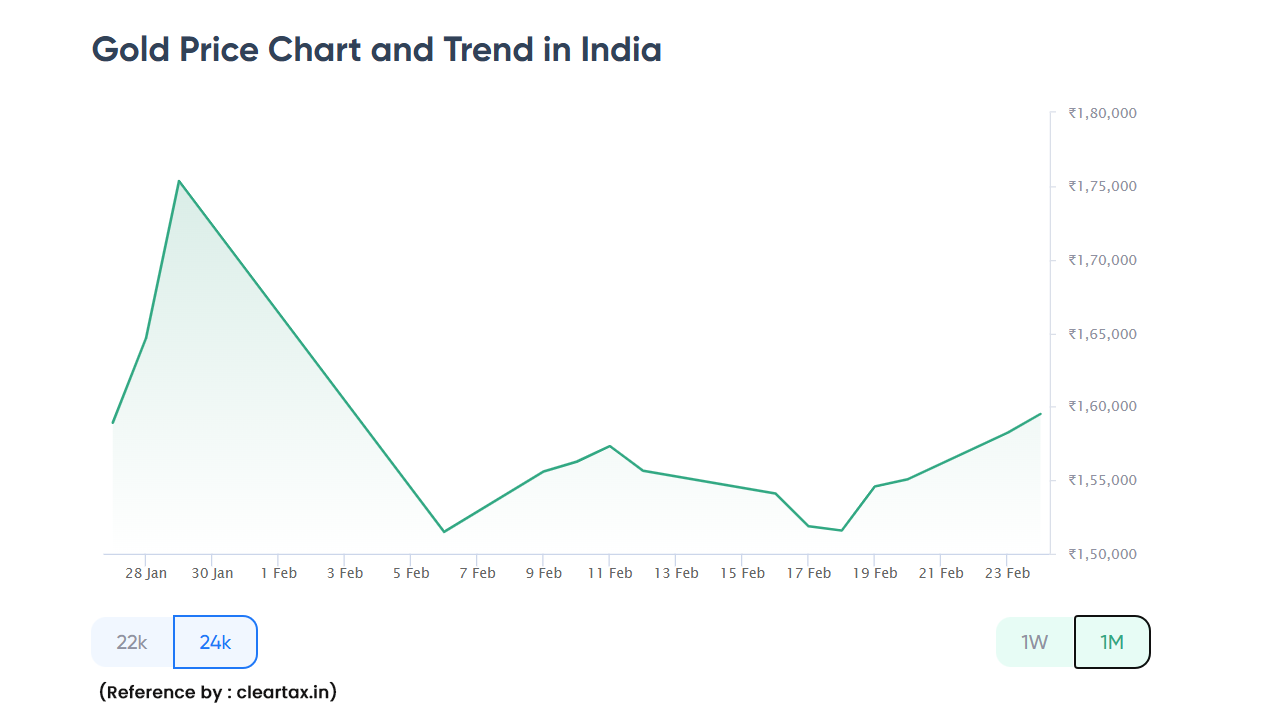
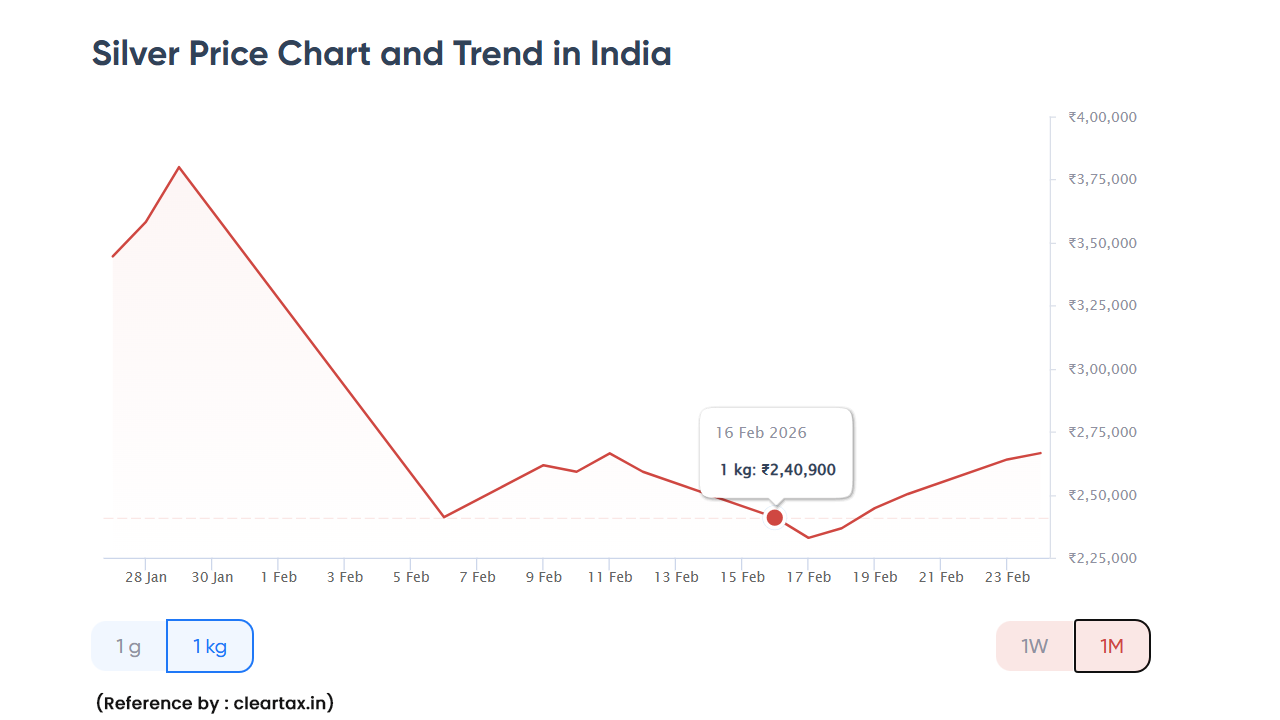
In recent months, gold and silver prices have shown sharp ups and downs. At times, gold rallied close to ₹1.6 lakh per 10 grams on the MCX, and silver climbed above ₹2.6 lakh per kilogram due to safe-haven buying amid global tensions.
But just as quickly, both metals corrected as profit-booking set in and markets churned with volatility.
At the same time, India’s real estate market continues to evolve. Buyers are returning to branded projects, and newer residential hubs in tier-2 cities are gaining interest from long-term investors.
This combination of market swings in precious metals and shifting dynamics in property has left many savers and investors unsure.
- Should you choose gold for safety?
- Silver for potentially higher returns?
- Or real estate for steady income and long-term growth?
Where the economy stands
India’s consumer inflation (CPI) was 2.75% in January 2026. That puts inflation inside the RBI’s tolerance band (2–4%). As per the data of MOSPI.
The Reserve Bank of India has kept its policy repo rate unchanged at 5.25% as of early February 2026. That means borrowing costs are steady for now.
Wholesale inflation (WPI) has nudged up recently, driven by food and metals. This can affect commodity and housing costs.
Gold in 2026 — why it still matters
Gold remains India’s favourite hedge. People buy it for safety, weddings, and savings. Gold is liquid. You can buy physical gold, ETFs, or Sovereign Gold Bonds
Current price signal (Feb 2026): MCX gold rallied in February 2026, with headline prices above ₹1.5 lakh per 10g in many cities.
Strengths of Gold
- Hedge against extreme risk and currency weakness.
- Easy to sell in India.
- SGBs pay interest and are tax-efficient if held to maturity.
Weaknesses of Gold
- No rental income or dividends.
- Can remain range-bound for years.
- Emotional buying during festivals can lead to poor timing.
When to prefer gold
- If you value capital preservation.
- If you want a simple, liquid hedge in an uncertain year.
(Source tags used above: Financial Express, Sunday Guardian, MOSPI.)
Silver in 2026 — risk + higher upside
Silver is both a precious metal and an industrial metal. That dual role gives it extra upside when industrial demand is strong. It also makes silver more volatile.
Current price signal (Feb 23, 2026): MCX silver held around ₹2.7–2.8 lakh per kg in late Feb 2026.
Why silver could outperform
- Strong industrial use in solar panels and electronics.
- EV and renewable energy expansion raise industrial demand.
- Smaller market size than gold, so price moves can be larger.
Risks
- Falls more sharply than gold in risk-off periods.
- Industrial slowdowns can hurt silver fast.
When to prefer silver
- If you accept higher volatility for higher potential returns.
- If you want tactical exposure (short-to-medium term).
(Source tag: Sunday Guardian, industry analyses.)
Real estate in 2026 — income and stability if you choose well
Real estate is a long-term asset. It can produce rental income. It benefits from leverage (home loans). But it is illiquid and location-dependent.
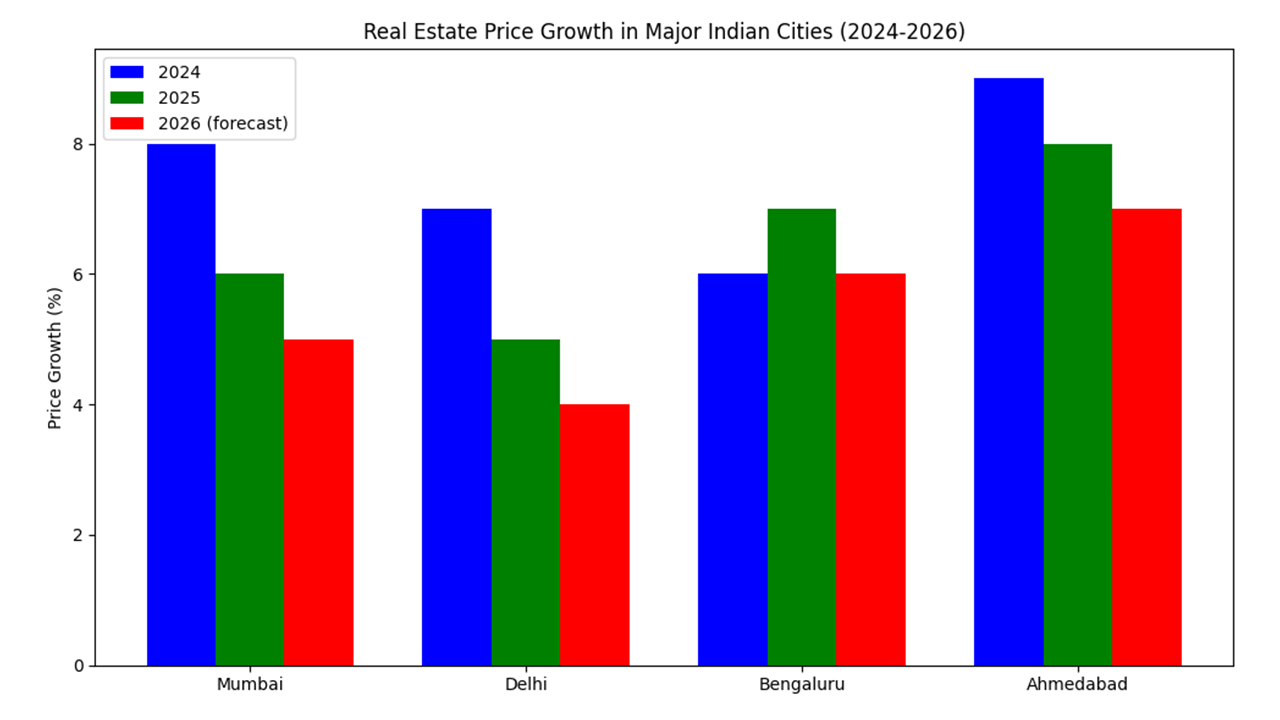
Market snapshot (2025 → 2026): India’s residential market showed resilience in 2025. Sales stayed stable. Developers launched carefully. Demand strengthened for affordable and premium homes, while luxury saw mixed results.
Affordable housing push: Government schemes have delivered large volumes of houses under PMAY-U. This reduces housing shortages in lower-income segments and affects demand patterns.
Rental yields & liquidity
Average gross rental yield in India is roughly 3–5% for residential properties (Q4 2025 numbers). Yields are higher for commercial real estate.
Strengths
- Rental income cushions returns.
- Long-term capital appreciation in good locations.
- Tax benefits on home loans and depreciation for commercial assets.
Weaknesses
- Low liquidity — selling takes months.
- High transaction costs — stamp duty, registration, brokerage.
- Interest rate sensitivity — higher rates reduce buyer affordability.
When to prefer real estate
- If you want a long horizon (7–10 years or more).
- If you want steady rental income.
- If you can pick the right city and micro-location.
(Source tags: Knight Frank, Global Property Guide, PMAY, Outlook Money.)
- High transaction costs — stamp duty, registration, brokerage.
- Interest rate sensitivity — higher rates reduce buyer affordability.
When to prefer real estate
- If you want a long horizon (7–10 years or more).
- If you want steady rental income.
- If you can pick the right city and micro-location.
(Source tags: Knight Frank, Global Property Guide, PMAY, Outlook Money.)
Head-to-head: quick comparison (India lens)
| Feature | Gold | Silver | Real Estate |
|---|---|---|---|
| Liquidity | High | High | Low |
| Income | No | No | Yes (rent) |
| Inflation hedge | Strong | Moderate | Strong (location dependent) |
| Volatility | Low–Medium | High | Low–Medium |
| Entry cost | Low (ETFs) | Low (ETFs) | High |
| Tax complexity (India) | Capital gains rules apply | Capital gains rules apply | Capital gains + stamp duty + registration |
(The comparison draws on RBI inflation stance, MCX price moves, rental yield data, and real estate reports.)
India-specific drivers to watch in 2026
- RBI policy and interest rates. If the repo rate moves, home loan EMIs and investor sentiment will change quickly.
- Inflation vs. wages. Low CPI now keeps real rates attractive. But rising wholesale prices (WPI) could push consumer prices later.
- Government housing programmes. PMAY and infrastructure spending shape demand in affordable segments.
- Renewable energy growth. Solar and EV adoption lifts industrial demand for silver.
- Urban migration & supply discipline. Tier-1 and Tier-2 city growth will keep demand for housing in select micro-markets.
Practical allocation examples
Use these as starting points. Adjust for age, goals, and risk appetite.
Conservative (age 50+, risk-averse)
- Gold: 50%
- Real estate (or REITs): 30%
- Silver: 10%
- Cash/FDs/liquidity: 10%
Balanced (age 35–50, moderate risk)
- Real estate / REITs: 40%
- Gold: 30%
- Silver: 20%
- Cash / short-term debt: 10%
Aggressive (age <35, growth focus)
- Real estate (or REITs): 40–50%
- Silver: 30%
- Gold: 10%
- Equities / alternatives: 10–20%
Notes for India
If you hold physical gold, store it securely and prefer hallmark-certified items
Consider SGBs for tax efficiency and interest.
Use REITs if you want real estate exposure with liquidity. (JLL; SEBI investor survey)
Tactical ideas for 2026
- If you expect higher volatility: trim equity risk and increase gold for short periods.
- If you expect a manufacturing/renewables boom: Add tactical silver positions via ETFs or physical coins.
- If you expect stable growth and city-level demand: Buy real estate in supply-constrained micro-markets or invest in REITs for income.
- If you need liquidity: Prefer gold ETFs and REITs over direct property.
Taxes and costs (India) — short checklist
Gold & Silver
- Short/long-term capital gains rules apply.
- SGBs have favourable tax treatment if held to maturity.
Real Estate
- Stamp duty and registration fees add 5–12%+ to the cost (state dependent).
- Long-term capital gains are taxed with indexation (if held for >24 months—verify current rule).
- Renting has taxable income after standard deductions.
Always consult a tax advisor for your situation. Laws change.
Common mistakes to avoid
- Buying gold or silver purely on emotion.
- Overleverage when buying property. High EMI stress can destroy returns.
- Ignoring locality, property returns are micro-market driven.
- Expecting silver to act exactly like gold. It often does not.
The final verdict
- Gold: Best for protection and liquidity. Buy via ETFs or SGBs for efficiency.
- Silver: Best for tactical, higher-risk bets tied to industrial growth. Keep positions sized modestly.
- Real Estate: Best for long-term income and wealth building if you can pick a location and manage costs. Consider REITs for liquidity.
Smart move for most Indian investors
Diversify across the three. Use gold as a safety anchor, silver as a tactical lever, and real estate for durable income and inflation protection.
Why Choose Laxmi Group for Real Estate Investment
Choosing the right developer is critical when investing in property. A trusted builder reduces risk and improves long-term value potential.
Laxmi Group is known for its focus on planned residential developments and commercial developments, quality construction, and practical layouts. The group has delivered projects designed for modern urban living, especially in growing city locations.
Their strengths include:
- Thoughtfully designed homes with essential amenities
- Focus on timely project delivery
- Customer-centric approach
- Presence in developing micro-markets with growth potential
For investors, this means better rental demand, stronger resale prospects, and reduced execution risk compared to lesser-known developers.
As always, investors should review project approvals, location advantages, and market demand before making a final decision.
Most Asked Questions (India – 2026 Investment Focus)
Which is better to invest in 2026: gold, silver, or real estate?
The best option depends on your goal. Gold offers stability, silver offers higher volatility and potential upside, while real estate provides rental income and long-term appreciation.
Is gold a good investment in India in 2026?
Gold remains a strong hedge against inflation and global uncertainty. It is suitable for conservative investors looking for capital protection and liquidity.
Will silver outperform gold in 2026?
Silver can outperform gold during industrial growth phases due to its use in solar panels and electronics. However, it is more volatile and riskier.
Is Indian real estate safe to invest in 2026?
Real estate in India is relatively stable, especially in high-demand Tier-1 and Tier-2 cities. However, returns depend heavily on location, project quality, and holding period.
What gives better returns in the long term: gold or property?
Historically, property in prime locations has generated higher long-term returns with rental income. Gold performs better during economic uncertainty.
Is silver too risky for long-term investment?
Silver is more volatile than gold. It can be suitable for partial allocation but may not be ideal as a primary long-term asset for conservative investors.
Should I invest in gold ETFs, physical gold, or SGBs in 2026?
Gold ETFs provide liquidity. Physical gold offers tangible ownership. Sovereign Gold Bonds (SGBs) offer interest income and tax efficiency if held to maturity.
What are the risks of investing in real estate in 2026?
Major risks include interest rate changes, liquidity issues, project delays, and location-specific demand fluctuations.
How much gold should be in a portfolio in 2026?
Financial experts generally suggest 5%–15% allocation in gold for diversification, depending on risk appetite.
Is land better than apartments in Ahmedabad?
Land may offer higher returns but carries higher risk. Apartments offer stable appreciation.
Is real estate better than gold during inflation?
Real estate often benefits from inflation through rising property values and rental income. Gold also acts as a hedge, especially during extreme economic stress.
Can silver prices crash suddenly?
Yes. Silver prices can fall sharply during economic slowdowns due to reduced industrial demand.
Is it the right time to buy property in India in 2026?
It depends on interest rates, city demand trends, and your investment horizon. Long-term investors may find opportunities in growing urban corridors.
Which is the safest investment in 2026?
Gold is generally considered safer due to liquidity and lower volatility compared to silver and direct real estate.
Should beginners invest in silver in 2026?
Beginners should limit exposure to silver due to volatility and consider balanced diversification instead.