Buying property is one of the biggest financial decisions you’ll ever make — but it also carries legal risks if ownership isn’t properly verified. Many buyers assume that registration or possession ensures legal ownership. Unfortunately, that’s not always true.
A property title search is the most reliable way to confirm whether the property you plan to buy truly belongs to the seller and whether it’s free from disputes, loans, or any legal claims.
In this comprehensive guide, you’ll learn what a property title search means, how to get a title search report, the process, cost, documents required, and how to check title records online in India.
A property title is the legal evidence of ownership. It defines who has the right to possess, use, transfer, or sell the property. The person holding the title is recognized as the legal owner under Indian law.
If the title is unclear or disputed, you could face problems like
A clear property title means
Before making any purchase, confirming title ownership through a title search report is essential to avoid legal hassles later.
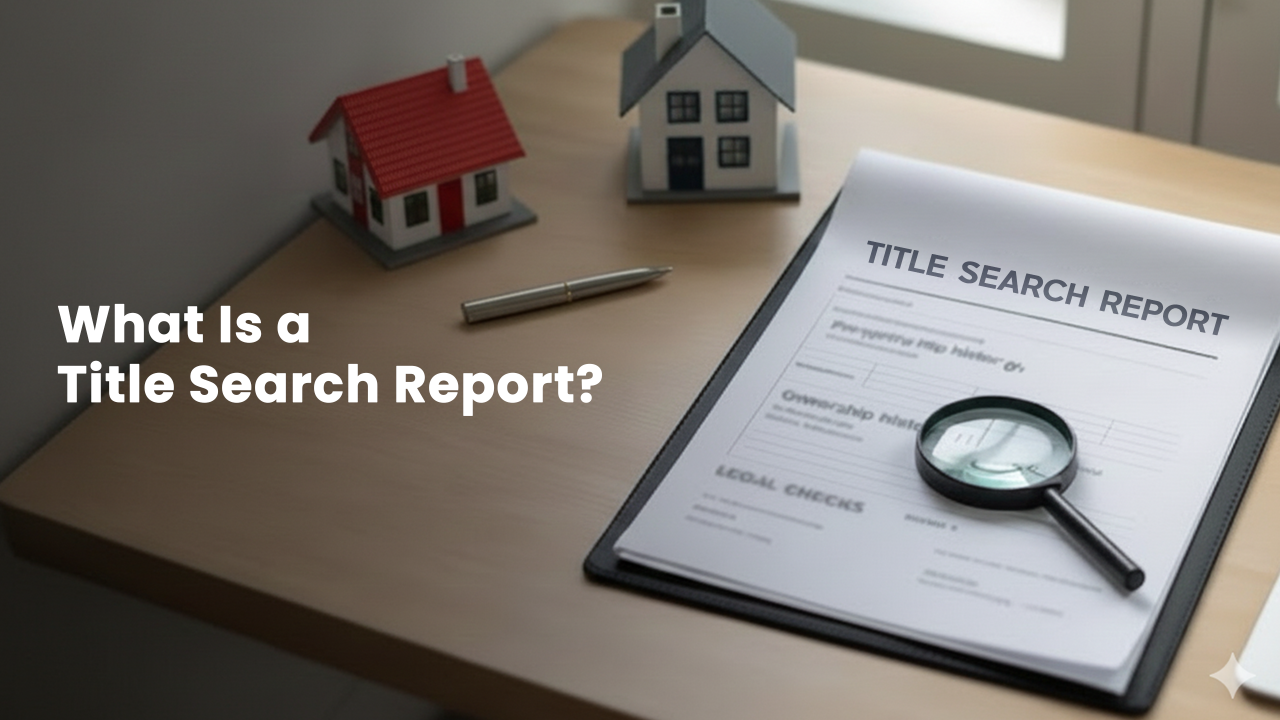
A Title Search Report (also known as a property title report or search report of property) is a legal document prepared by a property lawyer. It summarizes the ownership history, encumbrances, and legal status of a property over a specific period — usually the past 30 years.
The report is obtained after examining government land records, registration data, and court filings.
Key Information Included in a Title Search Report:
If any inconsistency or gap is found, the report will highlight it — allowing you to resolve the issue before purchase.
Performing a title verification before purchase safeguards you from fraud and ensures your money is invested securely.
Here’s why it’s important:
Skipping title verification may seem like a time-saver, but it can lead to years of court battles and financial loss.
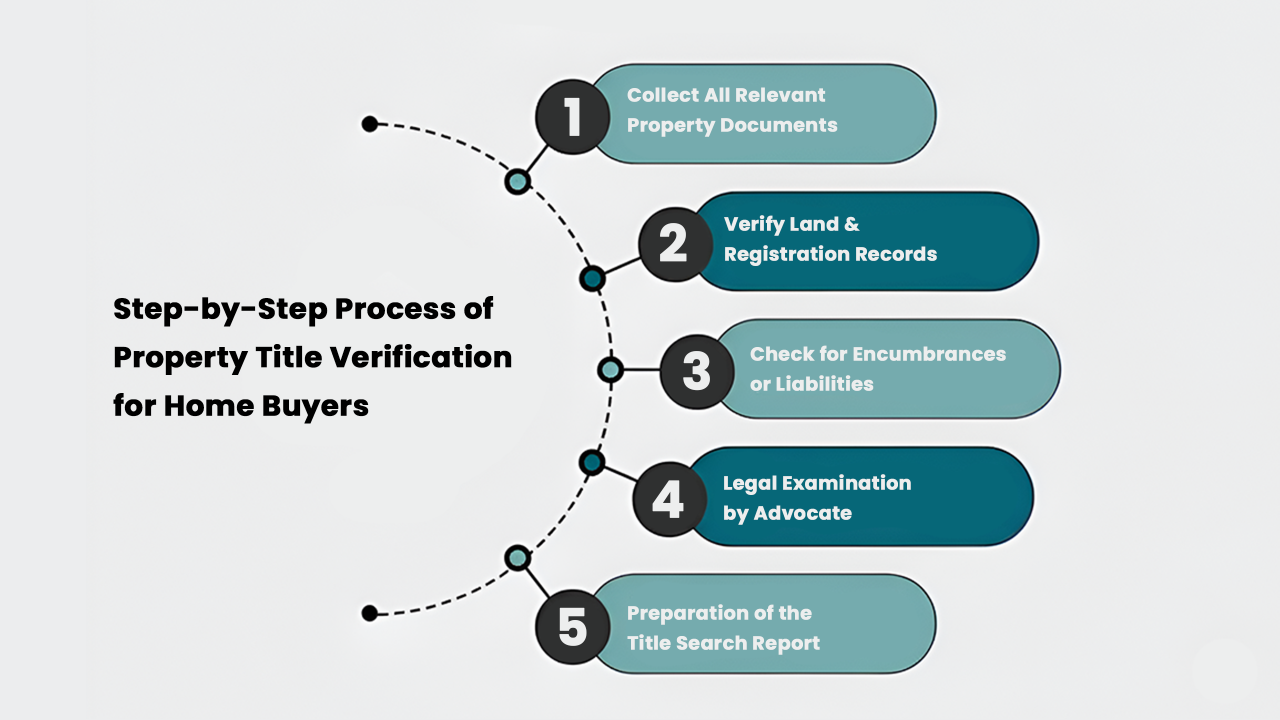
A property title search process involves systematic verification by legal experts. Here’s how it typically works:
Gather essential papers from the seller:
Your lawyer verifies these documents from:
A detailed check is conducted to ensure the property is free from:
An experienced property lawyer reviews all records, traces the ownership chain, and identifies any breaks, missing links, or disputes.
Once all documents are verified, the advocate issues a title search report stating:
Here’s a list of the most important documents needed for preparing a title report:
These documents help your advocate trace the complete ownership history and ensure no missing links exist.

A property lawyer is responsible for performing a professional title search and preparing the final report.
Only a legal expert can spot subtle inconsistencies or missing documents that could affect your ownership rights. Never rely solely on brokers or sellers for title verification.
Many Indian states offer online land and property record portals, making title verification easier than ever.
Here’s how you can check property ownership online:
Popular State Portals
| State | Portal Name | Website |
|---|---|---|
| Maharashtra | MahaBhulekh | mahabhulekh.maharashtra.gov.in |
| Gujarat | AnyROR | anyror.gujarat.gov.in |
| Karnataka | Bhoomi | landrecords.karnataka.gov.in |
| Telangana | Dharani | dharani.telangana.gov.in |
| Tamil Nadu | TN e-Services | eservices.tn.gov.in |
The cost of obtaining a title search report depends on:
Average Cost & Timeframe:
| State | Approx. Cost | Duration |
|---|---|---|
| Maharashtra | ₹5,000 – ₹10,000 | 5–7 working days |
| Gujarat | ₹3,000 – ₹7,000 | 4–6 working days |
| Karnataka | ₹4,000 – ₹8,000 | 5–8 working days |
| Delhi | ₹5,000 – ₹12,000 | 5–10 working days |
Performing due diligence ensures you don’t inherit legal or financial issues. Here’s a simple checklist:
This checklist ensures you’re investing in a legally clear and marketable property.
Even small oversights can lead to major problems later. Avoid these common errors:
A detailed title search may seem time-consuming but prevents long-term losses.
Fraudulent title documents are more common than many realize. Always look for these red flags:
Pro Tip:
Cross-check all documents at the sub-registrar office or land record portal and get them reviewed by a property lawyer.
If ownership or title details are unclear:
A clear title is the foundation of property security — never compromise on it.
Before sanctioning a home loan, banks conduct their own property title search.
They verify the title search report to ensure the property has a clear and marketable title.
If any defect or legal issue is found, the bank can reject or delay the loan.
Thus, buyers are advised to conduct an independent title verification before applying for a home loan.
Many buyers skip reading the report — a huge mistake.
Before registering your property:
A property title report is more than paperwork — it’s your legal proof of ownership.
It protects buyers, banks, and investors from future legal and financial complications.
Without it, even a registered property can be challenged in court. Hence, every buyer should prioritize title verification before completing a real estate transaction.
If you’re planning to buy property in Ahmedabad, choose Laxmi Group for trusted, transparent, and legally verified real estate options. Every residential project and commercial project developed by Laxmi Group undergoes a thorough property title search and legal verification process to ensure 100% title clarity and ownership authenticity. Our properties are RERA-approved, dispute-free, and located across Ahmedabad’s most promising areas, offering both comfort and investment value.
Whether you’re searching for your dream home or a profitable commercial space, Laxmi Group guarantees secure transactions, clear documentation, and complete peace of mind. Experience real estate with confidence — explore our title-clear properties in Ahmedabad today and invest in a future built on trust and transparency.
A property title search is the process of verifying legal ownership of a property. It ensures the seller has clear rights to sell and that there are no loans, disputes, or encumbrances attached.
A title search report is a legal document prepared by a property lawyer after checking ownership history, encumbrances, and legal records related to a property.
A licensed property lawyer or advocate prepares the report after examining land records, registration documents, and encumbrance certificates.
You’ll need the sale deed, mother deed, encumbrance certificate, property tax receipts, mutation register extract, and layout or plan approvals.
Visit your state’s official land record portal, like AnyROR (Gujarat), MahaBhulekh (Maharashtra), or Bhoomi (Karnataka), to check ownership details using the survey number or property ID.
The report includes ownership chain, encumbrances, registration details, litigation records, and the advocate’s legal opinion on title clarity.
A title search covers ownership history, disputes, and legality of ownership, while an encumbrance certificate only shows monetary or mortgage-related encumbrances.
It usually takes 3–10 working days depending on property type, record availability, and location.
The cost ranges between ₹3,000 and ₹12,000 depending on the state, type of property, and lawyer’s fee.
You can view basic ownership details online, but only a qualified property lawyer can conduct a full legal verification and prepare an authentic report.
Banks review the title search report to confirm that the property has a clear, marketable title before approving a loan. Any dispute or defect may lead to loan rejection.
If ownership or title details are unclear, avoid purchasing the property until the issue is legally resolved through the court or revenue authorities.
Check for mismatched owner names, altered pages, missing registration seals, or missing entries in government records. Always cross-verify documents at the sub-registrar office.
You risk facing ownership disputes, legal notices, or even cancellation of sale if the title is defective or under litigation.
A clear title property has a valid ownership history, no mortgages, pending dues, or disputes — making it legally safe to buy or sell.
It’s advisable to check your property’s title records every few years or before any resale, transfer, or refinancing process.
Some property verification platforms and legal firms provide online title search services, but ensure they’re verified and use government records for accuracy.
Yes. Even inherited or resale properties can have legal defects, so always get a title search report before sale or purchase.
RERA registration includes some title checks, but buyers should still conduct an independent title search for full legal clarity.
A title report is valid until a new transaction or ownership change occurs. For resale or mortgage, a fresh report is recommended.
Home | Our Projects | Completed projects | EMI Calculator | Investor | Joint Development | Channel Partner | Vendor | Career | Articles | About Us | Privacy Policy | Contact Us
© Laxmi Goldorna House Limited 2025 – All Rights Reserved. | Powered by : Zero Dimensions