








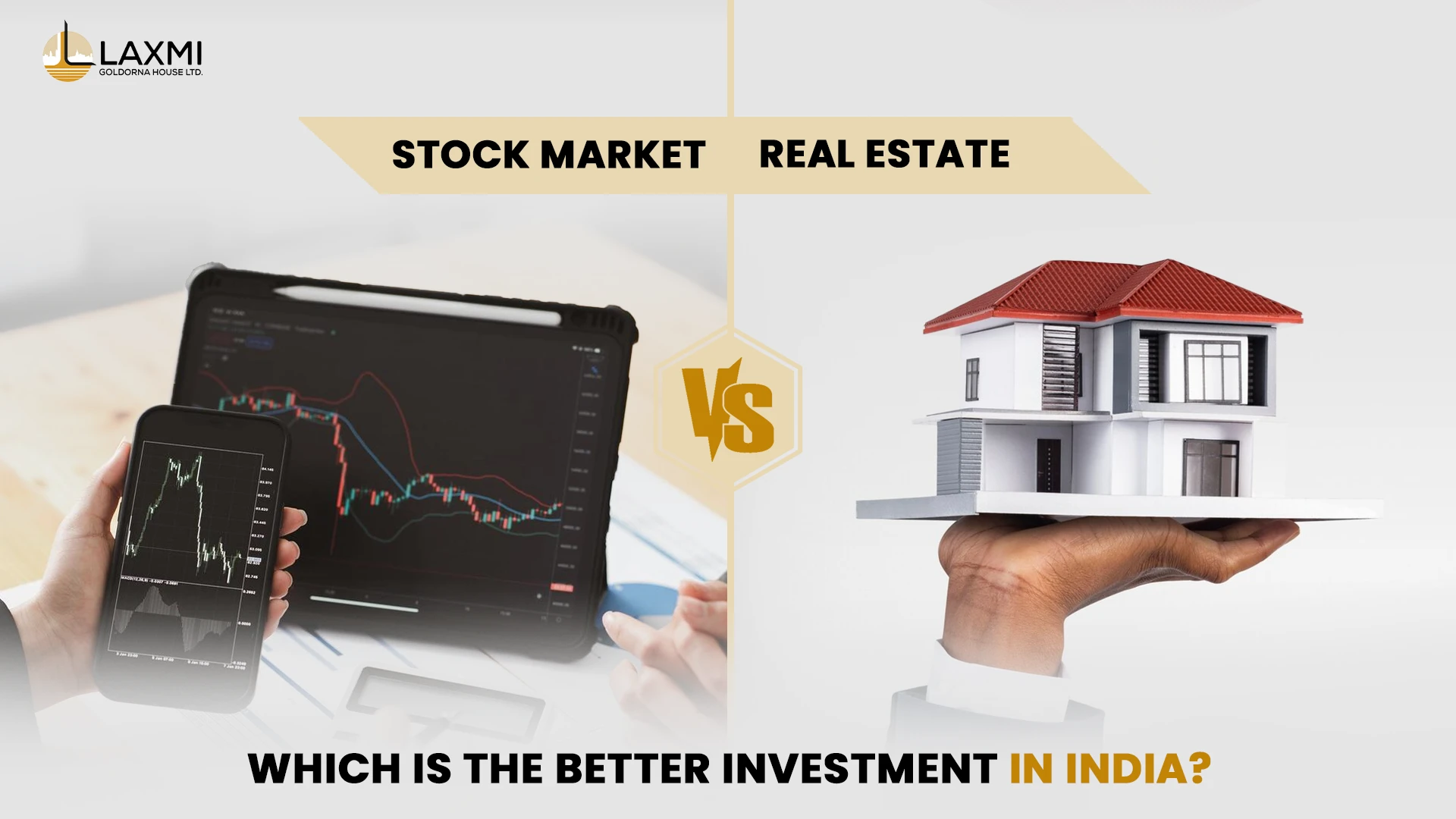
Stock Market vs Real Estate: Which Is the Better Investment in India?
If you have some money saved up and you’re wondering where to invest it, you’re not alone. In India, two options come up in almost every conversation: the stock market vs real estate.
Some people love stocks. Others trust property more. And most people aren’t sure which one is actually better. And even among those who prefer real estate, there’s another big question: Should you invest in residential or commercial property?
In this blog, we’ll take a clear, simple look at real estate vs the stock market, what they offer, what the risks are, and which one makes more sense for an Indian investor in 2026.
Let’s start with a simple example.
Rahul is 33 years old. He works at a private company in Pune and has saved ₹50 lakh. He’s been thinking for months, should he put this money in the stock market? Or should he buy a property?
Honestly? Rahul doesn’t know where to start. And that’s completely okay because this is one of the most common financial decisions Indians face today.
As we go through this blog, we’ll help Rahul and you figure out the best path forward.
One thing we’ll say upfront: it’s always a good idea to invest in more than one place. Spreading your money across different assets reduces risk and gives you better returns over time.
Now, let’s get into it.
What Are These Two Investments, Really?
Before we dive into the comparison of the stock market vs real estate, let’s quickly understand what each option actually means.
The Stock Market
When you invest in the stock market, you’re buying a small piece of a company. If the company grows, your money grows. If it struggles, your investment can go down too.
Stocks are flexible; you can start with as little as ₹500 and buy or sell anytime you want. But they can also be unpredictable.
In 2026, the Indian stock market is facing real pressure. Rising geopolitical tensions around the world are making investors nervous. When global uncertainty increases, foreign investors tend to pull their money out of markets like India, and that directly affects your portfolio. So while India’s long-term growth story is strong, right now the stock market carries a higher risk than usual.
Real Estate
When we talk about real estate vs stocks, property has one big advantage: it’s something you can see and feel. A flat, a plot, a commercial space, it’s real, it’s yours, and in India, it almost always goes up in value over time.
Unlike stocks, real estate doesn’t react to every news headline. It’s slower, steadier, and a lot more predictable, especially in a growing city.

The Stock Market: High Reward, But Higher Risk in 2026
When people think about the stock market versus real estate, stocks usually come to mind first. And for good reason, the Indian stock market has delivered impressive returns over the last decade. Sensex crossed 80,000 in 2024. Several mid-cap stocks gave 30–40% returns in a single year.
But 2026 is a different story.
Rising geopolitical tensions, worldwide trade conflicts, regional wars, and economic slowdowns in developed countries have made global investors cautious. When foreign institutional investors withdraw money from emerging markets like India, stock prices fall. Sometimes gradually. Sometimes overnight.
Add to that the volatility in currency markets, rising interest rates, and uncertain corporate earnings, and you have a market that is difficult to predict, even for experienced investors.
This doesn’t mean the stock market is a bad investment. For someone with a long horizon of 10-15 years and a high risk appetite, stocks can still build serious wealth. But for a first-time or mid-level investor looking for stability, the current environment demands extra caution.
Rahul, for example, did his research and considered putting his entire ₹50 lakh into stocks. But when he saw how much his friend’s portfolio had dropped in just two months purely due to global news, he decided to think twice.
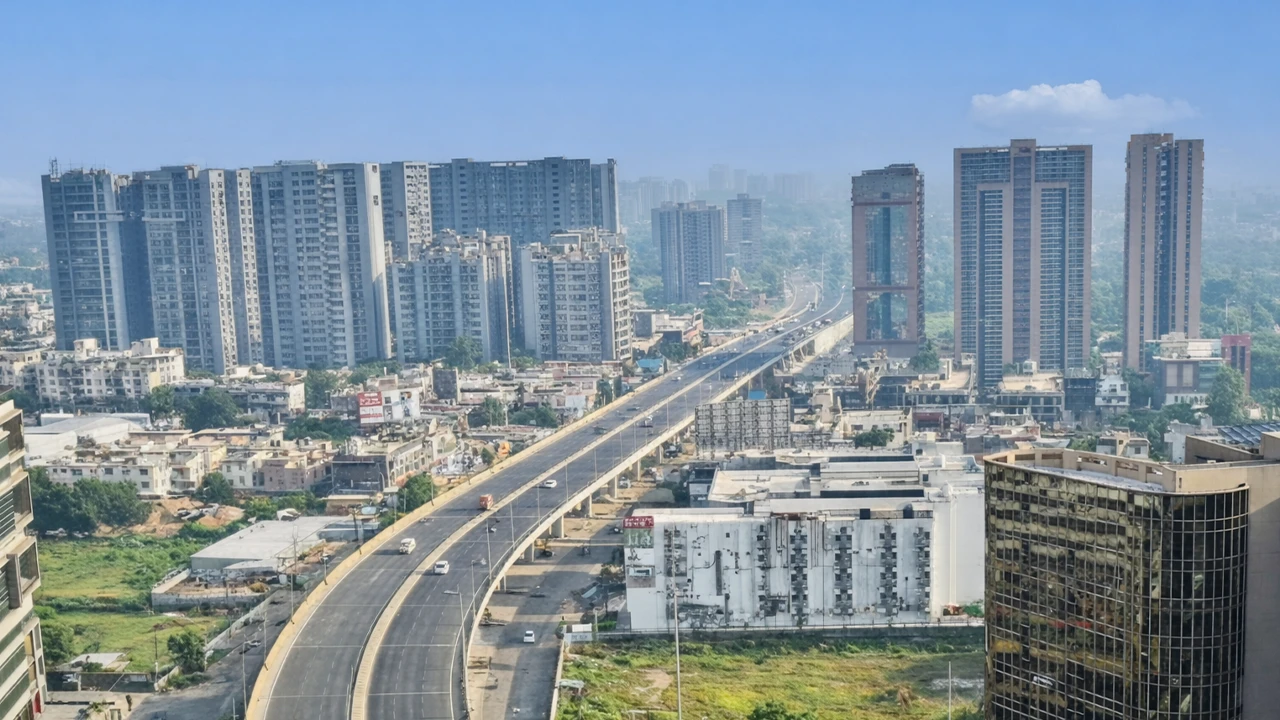
Real Estate: Stable, Tangible, and Growing in 2026
When you compare real estate vs stocks, one thing stands out immediately: property gives you something stocks never can. Something physical. Something you can live in, rent out, or pass on to your family.
In India, real estate has always been more than just an investment. It’s security. And in 2026, that security is backed by some very strong fundamentals:
- Demand is at an all-time high: urbanisation is accelerating, the middle class is growing, and more young professionals are looking to buy their first home
- Two sources of return: a well-located flat generates steady rental income while the property itself appreciates over time
- Natural hedge against inflation: when prices rise across the economy, property values rise with them. Your investment holds its real value
- Immune to global shocks: unlike stocks, property prices don’t crash overnight because of a war on the other side of the world. Real estate is driven by local demand, not global sentiment
This is what makes the stock market vs real estate comparison so clear in 2026: one reacts to headlines, the other is built on fundamentals.
Rahul looked at a 3 BHK flat in Ahmedabad that was priced at ₹48 lakh. The location had good connectivity, upcoming infrastructure, and strong rental demand. For the first time in months, the numbers actually made sense to him.
Stock Market vs Real Estate: A Direct Comparison
Let’s put both options side by side and see how they actually stack up for an Indian investor in 2026.
| Factor | Stock Market | Real Estate |
|---|---|---|
| Returns | 12–15% avg (long term) | 8–12% avg + rental income |
| Risk | High, market-driven | Low, demand-driven |
| Liquidity | High, sell anytime | Low, takes time to sell |
| Entry Amount | As low as ₹500 | Typically ₹20 lakh+ |
| Stability | Volatile in 2026 | Stable and growing |
| Tangibility | No physical asset | Physical asset you own |
| Passive Income | Dividends (not guaranteed) | Rental income (consistent) |
| Inflation Protection | Partial | Strong |
A few things are clear from this comparison.
Stocks win on liquidity and low entry cost. If you have a small amount to invest and a long time horizon, the stock market can work well for you.
But real estate wins on stability, passive income, and long-term wealth creation, especially in a country like India, where property demand is only going to grow.
One important thing to note these two options don’t have to compete. As we mentioned earlier, spreading your money across multiple assets is always a smarter approach than putting everything in one place.
According to Knight Frank India’s 2024 report, annual residential sales across India reached a 12-year high of 3.5 lakh units, a clear sign that real estate remains one of the strongest-performing asset classes in the country.
For Rahul, this comparison made things much clearer. Stocks felt like a gamble right now. Property felt like a plan

Why Ahmedabad is One of the Best Cities to Invest in Real Estate Right Now
In the stock market vs real estate debate, location plays a huge role, and right now, Ahmedabad is one of the smartest places to put your money in property.
Here’s what’s driving it.
The Olympics Effect
India is set to host the 2036 Olympics, and Ahmedabad is expected to be a primary host city. Infrastructure development is already underway, and historically, cities that host the Olympics see property prices rise significantly in the years leading up to the event. Investors who get in early tend to benefit the most.
Metro & Bullet Train
Ahmedabad’s metro is expanding fast. The Mumbai-Ahmedabad bullet train is well underway. Better connectivity is opening up newer areas of the city neighbourhoods that were once considered far from the centre, and are now attracting serious buyer interest and delivering strong appreciation.
Tourism & Economic Growth
Ahmedabad is India’s first UNESCO World Heritage City. With growing tourism, a booming textile and pharmaceutical industry, and increasing IT presence, the city’s economy is on a strong upward path. A stronger economy means stronger real estate demand simple as that.
Emerging Neighbourhoods Worth Watching
Areas like Narol, Naroda, Bhadaj, and Science City are no longer just upcoming; they’re arriving. Good connectivity, affordable entry prices, and strong rental demand make these micro-markets ideal for both first-time buyers and long-term investors.
If you’re considering a 2 BHK flat or a 3 BHK apartment, now is a good time to explore your options.
How Much Have Property Prices Grown? 2020 vs 2026
If you want to understand the real estate vs stocks debate, just look at what property has done in the last six years.
In 2020, COVID-19 had softened the market. Prices were low, investors were cautious, so many of them held back. Those who invested anyway are having significant gains today.
Areas like Narol, Naroda, and Bhadaj in Ahmedabad have seen property prices grow by 55% to 75% between 2020 and 2026. Neighbourhoods near Science City and SG Highway have grown even faster, driven by infrastructure development, better connectivity, and rising buyer demand.
This is not short-term speculation. This is consistent, continuous growth built on real scenarios, and with the Olympics, metro expansion, and bullet train project all still ahead, experts believe the best is yet to come.
Compare that to the stock market, where a single global event can erase months of gains overnight. The case for real estate investment in India has never been stronger.
When Should You Choose Stocks and When Should You Choose Real Estate?
There’s no single right answer in the stock market vs real estate debate. It depends on your goals.
Choose stocks if you’re starting small, have a long time horizon, and are comfortable with risk. Choose real estate if you want stability, passive income, and long-term wealth creation in a high-growth market.
But honestly? The smartest move is both. Stocks for liquidity. Real estate for stability. Together, they make a stronger portfolio.
If you’re curious about how inflation affects your property decisions, check out our guide on how inflation drives changes in the housing market.
So, Which Is Better, the Stock market or Real Estate?
Both have their place. But in 2026, with global markets under pressure and Indian cities like Ahmedabad growing faster than ever, real estate offers something stocks simply can’t: stability, tangibility, and consistent long-term returns.
For someone like Rahul, the answer became clear. Stocks may be part of his future portfolio, but property is where he’s putting his ₹50 lakh first.
If you’re thinking the same way, explore our latest residential projects in Ahmedabad and take the first step towards a smarter investment.
Frequently Asked Questions
Which is better, the stock market or real estate in India in 2026?
In 2026, real estate holds an edge. Global market instability makes stocks riskier, while property demand across Indian cities remains strong and steady.
Which gives better returns, stocks or property in India?
Stocks can give higher returns over 10–15 years, but with high volatility. Real estate offers steady appreciation plus rental income, comparable returns with far less risk.
Is real estate a good investment for first-time investors?
Yes, especially in high-growth cities like Ahmedabad. It’s tangible, easy to understand, and doesn’t require daily market tracking.
Where should I invest ₹50 lakh in India right now?
A significant portion of real estate makes strong sense; you get a physical asset, rental income, and long-term appreciation. Diversify the rest into mutual funds for liquidity.
Is Ahmedabad a good city to invest in real estate?
Absolutely. With the 2036 Olympics, metro expansion, and bullet train connectivity, Ahmedabad is one of India’s most promising real estate markets.
Can I invest in both stocks and real estate?
Yes, and that’s the smartest approach. Stocks for liquidity. Real estate for stability. Together, they make a stronger portfolio.